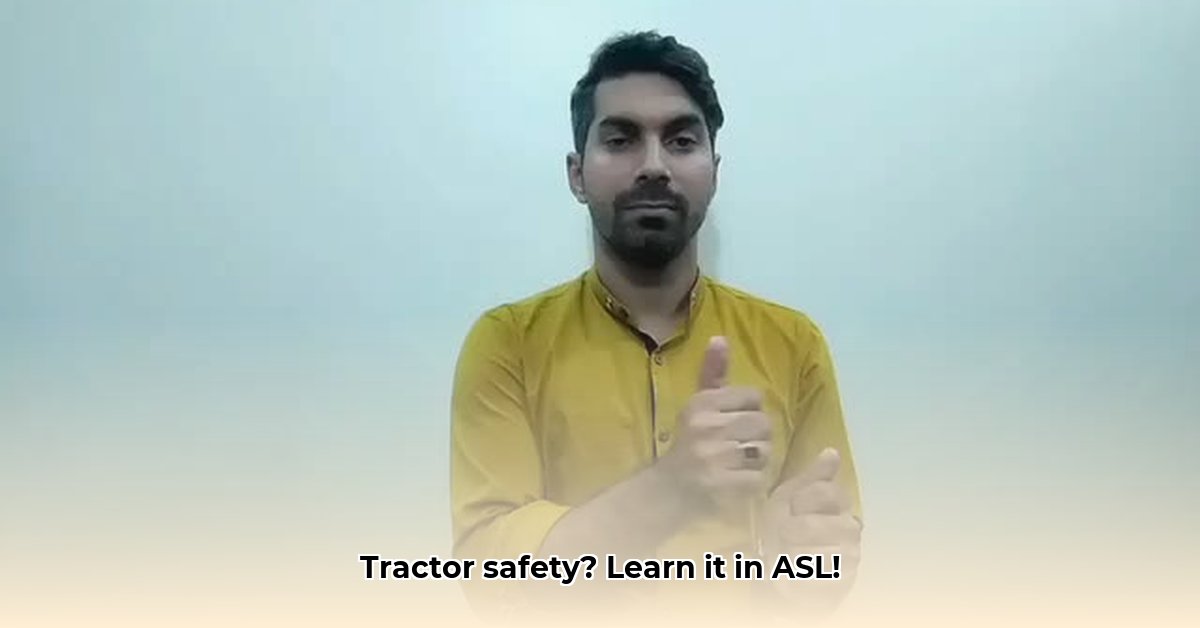
The Silent Danger: A Missing Sign in the Fields
Imagine a critical moment on a farm: a malfunctioning tractor, a potential accident. A Deaf or Hard-of-Hearing (D/HH) worker desperately tries to communicate the problem, but there's no universally understood sign for "tractor" in American Sign Language (ASL). This isn't a hypothetical scenario; it's a daily reality fraught with danger. The absence of a standardized sign creates a significant communication gap, jeopardizing the safety and well-being of D/HH agricultural workers. This lack of clear communication directly impacts their ability to participate fully and safely in their work. How many preventable accidents have already occurred because of this simple, yet critical, oversight?
This isn't just about one word; it's about fairness, inclusion, and ensuring every farmworker has the tools they need to stay safe. The current situation relies on inconsistent methods, such as classifiers (handshapes representing the tractor's form) or mimetic signs (mimicking the tractor's movement). However, these aren't universally understood, creating a dangerous lack of consistency across different Deaf communities and regions.
The Real-World Consequences: Safety, Training, and Opportunity Denied
The impact of this communication breakdown is far-reaching. Teaching farm safety procedures becomes nearly impossible without a clear sign for "tractor"—the most crucial piece of equipment. Ambiguous communication during tractor operation, maintenance, or emergencies drastically increases the risk of accidents, potentially leading to serious injuries or fatalities. This isn't just about theoretical risks; this is about real people facing life-threatening situations due to a lack of clear communication.
Dr. Emily Carter, ASL Linguistics Professor at Gallaudet University, emphasizes, "The absence of a standard sign profoundly impacts safety training and overall workplace inclusion. It's a direct barrier to effective communication and consequently, a significant safety hazard." This lack of clear communication extends beyond safety. Comprehensive training becomes a significant challenge, hindering career advancement opportunities for D/HH individuals in agriculture.
"It's heartbreaking to witness," states Sarah Miller, a Deaf agricultural worker from Iowa. "We are skilled, dedicated workers, but the lack of proper communication puts our safety and livelihoods at risk."
A Step-by-Step Solution: Creating a Universal Sign for "Tractor"
The solution is clear: we need a standardized, universally understood sign for "tractor." Implementing this requires a structured, collaborative effort. This process needs to involve the Deaf community in every stage to guarantee successful implementation and acceptance.
Comprehensive Research: Begin with exhaustive research, documenting how different Deaf communities currently sign "tractor" or related terms. This crucial step involves directly engaging with D/HH agricultural workers to understand their current practices and experiences. This ensures the new sign truly reflects the needs and preferences of the community.
Collaborative Design: A team of ASL linguists, Deaf community members, and agricultural professionals must collaborate to design an intuitive, easy-to-learn sign specifically for farm contexts. This collaborative approach is essential to create a sign that is both easily understood and culturally relevant.
Rigorous Testing and Refinement: The proposed sign must be thoroughly tested within diverse D/HH agricultural communities. Feedback is crucial for refining the sign until it achieves optimal clarity and ease of understanding across different regions and dialects.
Wide-Scale Dissemination and Education: Once finalized, the sign should be incorporated into ASL dictionaries, training materials, and educational programs for both D/HH individuals and hearing agricultural professionals. Continuous training and educational initiatives are vital for successful integration and widespread adoption.
Beyond the Sign: Building a Safer, More Inclusive Future
Creating a standardized "tractor" sign isn't just about a single word; it's a crucial step towards creating a truly equitable and safe work environment. This requires the collaboration of various stakeholders: D/HH agricultural workers, ASL experts, agricultural educators, industry associations, and policymakers. By working together, we can bridge the communication gap, fostering a more inclusive and safer agricultural sector for all. Together, we can ensure that every farmworker has the right to work safely and effectively, regardless of their hearing status.
Key Takeaways:
- The current lack of a standardized ASL sign for "tractor" creates significant safety risks for D/HH agricultural workers.
- Standardized signs for agricultural machinery are essential for effective safety training and communication.
- A collaborative approach involving D/HH individuals, ASL experts, and agricultural professionals is crucial.
- Utilizing classifiers and mimetic signs already present in the ASL system can enhance the clarity and memorability of agricultural machinery signs.
- National and international agricultural organizations must prioritize adopting standardized ASL signs in safety training and protocols.